Myopia Management in South Sioux City
Is your child squinting to see the board at school or holding their tablet too close to their face? These are common signs of myopia, also known as nearsightedness.
At Vision Siouxland, we provide myopia management in South Sioux City, offering personalized care to slow the progression of nearsightedness and protect your child’s future vision. Walk-ins are welcome, making it easy to fit vision care into your family’s busy schedule.
What is myopia?
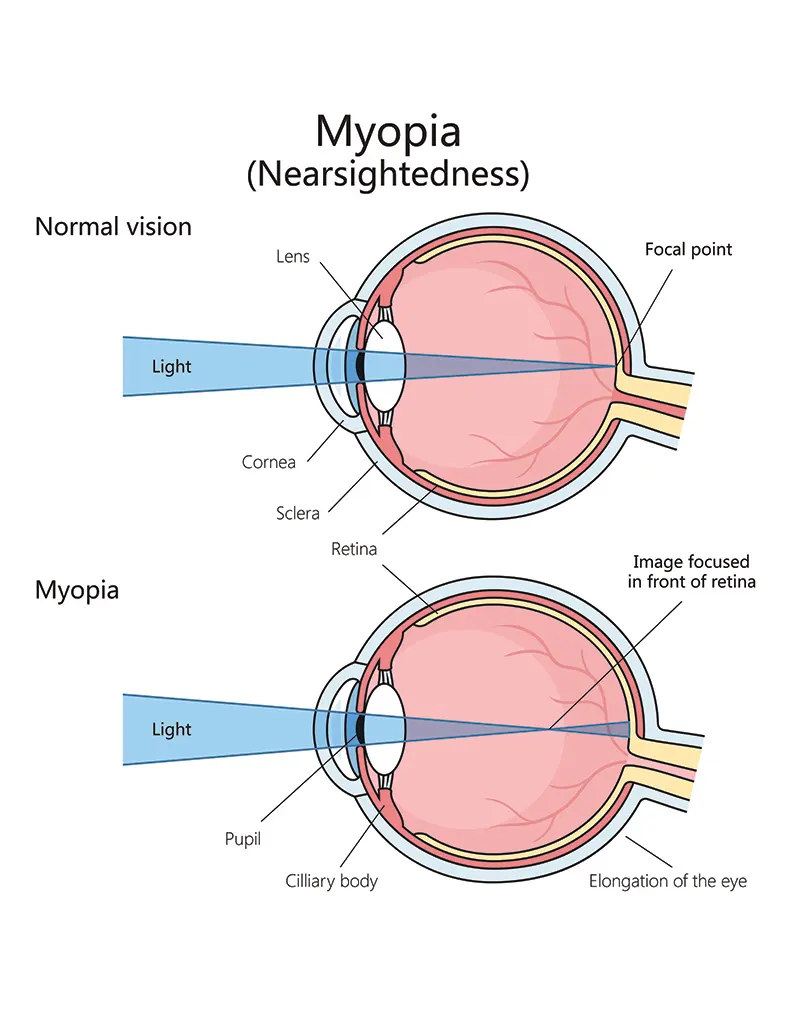
Myopia occurs when the eyeball grows slightly too long or the cornea is too curved. Someone with this condition can see close-up objects clearly, but distant objects look blurry.
Myopia usually begins in childhood and can gradually worsen as your child grows (known as progressive myopia). Factors like a family history of myopia, too much screen time, and not enough outdoor activity can all affect how quickly it progresses.
Why is myopia control important?
Myopia means more than just needing glasses. Children with higher degrees of myopia have an increased risk of developing eye conditions later in life, such as retinal detachment, glaucoma, and cataracts.¹
Standard glasses or contact lenses improve vision, but they are not a solution for controlling myopia progression. Myopia management slows the elongation of the eyeball, which is the main cause of progressive myopia.¹
Myopia treatment options
At Vision Siouxland, we offer a variety of options which can help treat and slow the progression of myopia.
Stellest lenses
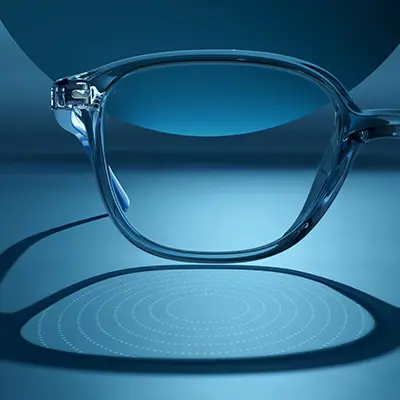
Essilor Stellest® lenses are the first FDA-authorized spectacle lenses proven to slow the progression of nearsightedness in children. These lenses have been shown to slow myopia progression by 71% on average over two years.² Our experienced eye doctors work with you and your child to ensure Stellest® lenses fit comfortably and support their daily activities.
Multifocal contact lenses
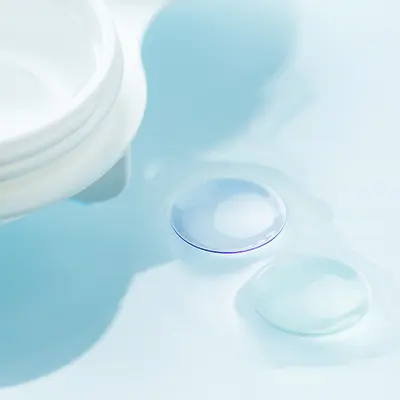
These specially designed lenses let you see clearly at different distances without glasses. The bottom part of the lens allows you to see things up close, while the top part is for seeing things far away. Multifocal contact lenses also help with the effects of presbyopia, the age-related loss of near vision, which compounds the existing effects of myopia.
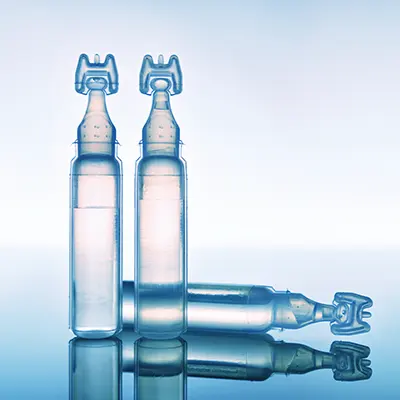
Low-dose atropine eye drops
Low-dose atropine drops are sometimes prescribed to slow myopia progression in children. These prescription drops are safe and effective, and used once daily, with one drop in each eye at bedtime. Side effects are typically mild and may include pupil dilation, sensitivity to light, or brief blurred vision.
Manage nearsightedness with expert care
Helping your child maintain clear, healthy vision is a partnership. Our skilled optometrists provide personalized myopia management in South Sioux City and monitor progress over time during pediatric eye exams. Walk-in appointments are welcome, or you can schedule an appointment.